The India energy drink label dispute 2026 has intensified after PepsiCo warned the Delhi High Court that restrictions on using the words “Energy Drink” could disrupt supplies of products including Sting. The dispute involves the Food Safety and Standards Authority of India (FSSAI), PepsiCo, Red Bull, Monster Energy and Reliance Consumer Products.
But the most important question for consumers is straightforward: Has India actually banned energy drinks, or is the government challenging how certain beverages are labelled and marketed?
The answer is more nuanced than many headlines suggest.
As of 15 October 2026, the legal dispute primarily concerns the use of the “Energy Drink” description on certain caffeinated beverages, the procedure followed by the regulator, and whether manufacturers can continue producing stock carrying the disputed wording.
The Delhi High Court has granted different forms of relief in related cases. However, the central questions concerning the legality and justification of the regulatory restrictions remain unresolved.
Here is what happened, what FSSAI’s existing regulations say, how the court decisions differ, and what this controversy could mean for India’s beverage industry.
Key Takeaways: India Energy Drink Label Dispute 2026
- Energy drinks have not been shown to be subject to a blanket nationwide sales ban. The current litigation concerns the disputed “Energy Drink” description and associated regulatory directions.
- FSSAI issued directions in June 2026 requiring certain beverage manufacturers to stop using the description, citing concerns about misbranding and potentially misleading claims.
- Red Bull obtained important court relief in September 2026 after the Delhi High Court found problems with the regulatory procedure.
- PepsiCo and Monster obtained interim protection on 6 October 2026, but the relief did not generally authorise fresh manufacturing with the disputed label.
- On 15 October 2026, PepsiCo warned of potential stock shortages if the restrictions continued. The court again declined to permit production under the disputed wording.
- The legal merits remain undecided. According to Reuters, a further hearing was scheduled for 30 October 2026.
- For consumers, ingredient lists, caffeine declarations and appropriate warnings remain more informative than marketing terminology alone.
Sources: Reuters, 15 October 2026 and Delhi High Court order, 6 October 2026.
Table of Contents
- What happened in India’s energy drink dispute?
- Why did FSSAI challenge the “Energy Drink” label?
- What did FSSAI’s 2024 advisory actually say?
- Timeline: From the advisory to the October 2026 court battle
- PepsiCo vs FSSAI: What happened in court?
- Why is Red Bull in a different position?
- What about Monster Energy and Reliance?
- Is there an energy drink ban in India?
- How are energy drinks regulated in India?
- What should consumers check on a beverage label?
- What could change for India’s beverage industry?
- What does the dispute mean for BRRAT?
- What happens next?
- Frequently asked questions
- Sources and further reading
What Happened in India’s Energy Drink Label Dispute?
The controversy escalated after FSSAI directed several manufacturers to discontinue the use of the description “Energy Drink” for specific caffeinated beverage products.
The companies challenged those directions, arguing that the regulator’s actions conflicted with earlier guidance and that they had not been given an adequate opportunity to respond.
On 6 October 2026, Justice Amit Mahajan of the Delhi High Court considered PepsiCo India Holdings’ petition challenging orders dated 30 June 2026.
The disputed directions concerned products including Sting Energy and Adrenaline Rush Energy Drink – Ultimate Performance.
The court temporarily stayed the challenged regulatory orders, permitted the sale of certain already-manufactured stock and expressly stated that its order did not authorise further manufacturing with the disputed description.
That distinction subsequently became central to PepsiCo’s appeal.
What changed on 15 October 2026?
In a report published on 15 October, Reuters stated that PepsiCo warned the Delhi High Court about the risk of running out of supplies of affected products within approximately two months.
PepsiCo argued that existing packaging investments and manufacturing arrangements made a change in labelling difficult to implement immediately.
According to Reuters, the court again declined to let PepsiCo resume manufacturing beverages carrying the disputed “Energy Drink” description.
The company’s lawyers argued that this created a competitive disadvantage because Red Bull had obtained broader relief in its separate case.
The court had not, however, finally decided whether FSSAI’s underlying restrictions were legally justified.
This is why describing the dispute as a final ban, or a complete legal victory for manufacturers, would be inaccurate.
Read the Reuters report published on 15 October 2026.
Why Did FSSAI Challenge the “Energy Drink” Label?
FSSAI is India’s national food safety regulator, operating under the Food Safety and Standards Act, 2006.
Its responsibilities include food standards, labelling requirements, safety oversight and regulation of food-related claims.
In the 2026 dispute, the regulator raised concerns that describing certain caffeinated beverages as “Energy Drinks” could amount to misbranding or misleading claims.
The larger regulatory issue is whether the description accurately represents the food category and properties of the product.
Why does terminology matter?
Consider three different beverage descriptions:
- Caffeinated beverage: Describes a drink containing caffeine, subject to applicable classification and regulatory requirements.
- Energy drink: A widely recognised commercial expression, but its regulatory use depends on the applicable product standards and directions.
- Health drink: A different expression that FSSAI’s March 2024 advisory specifically noted was not defined or standardised under the relevant food law.
These expressions are not automatically interchangeable.
A phrase printed prominently on a can may influence what consumers believe a product does.
For example, a consumer might interpret “energy” as meaning physical fuel, mental alertness, sports performance or simply a beverage category.
Those interpretations are not scientifically identical.
Caffeine is a stimulant associated with increased alertness under some conditions. It does not replace sleep, food or recovery, and its effects depend on dose and individual sensitivity.
Therefore, questions about terminology are not merely cosmetic. They are related to the accuracy of product communication.
At the same time, whether a particular description violates Indian food law requires an examination of the applicable regulations, product classification, evidence and lawful regulatory procedure.
That is the issue being tested in court.
What Did FSSAI’s March 2024 Energy Drink Advisory Actually Say?
This is one of the most important parts of the entire controversy.
On 28 March 2024, FSSAI issued an advisory to e-commerce food business operators about the categorisation of health drinks and energy drinks on online platforms.
The advisory specifically addressed products being placed in potentially inappropriate website categories.
It also clarified that the expression “Energy” drinks was permitted for products licensed under particular food category codes:
| Food category code | Description |
|---|---|
| FCS 14.1.4.1 | Carbonated water-based flavoured drinks |
| FCS 14.1.4.2 | Non-carbonated water-based flavoured drinks |
The advisory referred to products standardised under sub-regulation 2.10.6(2) of the Food Safety and Standards (Food Products Standards and Food Additives) Regulations, 2011.
This wording became a major part of the manufacturers’ arguments in 2026.
Why did beverage companies rely on the advisory?
PepsiCo argued that its products fell within the categories identified by the earlier FSSAI clarification.
Its position was that the regulator could not reasonably reverse course without following the required procedure and allowing the company to respond.
However, the existence of the 2024 advisory does not mean that every beverage can use any energy-related claim without restriction.
The advisory must be read alongside:
- Applicable food product standards.
- Correct licensing and product classification.
- Labelling and display requirements.
- Advertising and claims regulations.
- Subsequent legally applicable directions and court decisions.
Important distinction: The March 2024 document primarily addressed e-commerce product categorisation. It was not an unrestricted exemption from all future enforcement action.
The question of how that advisory interacts with the 2026 directions is part of the wider legal disagreement.
Official primary source: FSSAI advisory dated 28 March 2024 — Health Drinks / Energy Drinks on E-Commerce Websites (PDF).
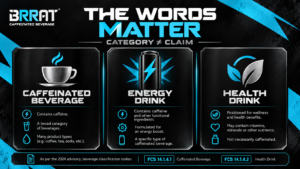
Beverage classification, commercial terminology and health claims are related but distinct regulatory considerations.
India Energy Drink Label Dispute 2026: Complete Timeline
The dispute developed over several months rather than appearing overnight.
| Date | Key development |
|---|---|
| 28 March 2024 | FSSAI issues its advisory about health drink and energy drink categorisation on e-commerce platforms. |
| 30 June 2026 | FSSAI issues directions affecting the use of the “Energy Drink” description by certain beverage companies. |
| 17 July 2026 | A consequential regulatory communication is issued in the PepsiCo matter. |
| 20 July 2026 | A meeting later cited in court by the regulator’s lawyers takes place with industry representatives. |
| 29 September 2026 | Red Bull obtains relief from the Delhi High Court on procedural grounds. |
| 6 October 2026 | PepsiCo and Monster obtain interim relief concerning the disputed regulatory directions, subject to restrictions. |
| 12 October 2026 | A division bench declines immediate permission for PepsiCo to manufacture further stock bearing the label and seeks reasons for the restriction. |
| 15 October 2026 | Reuters reports PepsiCo’s warning about potential stock shortages and the court’s continued refusal to permit fresh manufacturing under the disputed description. |
| 30 October 2026 | Next hearing date reported by Reuters for the subsequent proceedings. |
| 5 November 2026 | Date listed in the separate 6 October single-judge order in PepsiCo’s writ petition. |
Why are two future dates mentioned?
The publicly available 6 October order lists 5 November 2026. Reuters’ 15 October reporting identifies 30 October as the next hearing in the subsequent proceedings.
These references should not be treated as interchangeable. Court schedules can involve different applications, appeals and procedural stages.
Readers should consult the latest case status before relying on either date for future developments.
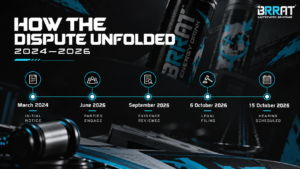
Major regulatory and court milestones leading to the October 2026 energy drink labelling dispute.
PepsiCo vs FSSAI: What Exactly Happened in the Delhi High Court?
The PepsiCo proceedings highlight two separate questions:
- Did FSSAI follow the required procedure before issuing its directions?
- Was the regulator legally justified in restricting the “Energy Drink” description?
These are not the same legal issue.
PepsiCo’s position
According to the 6 October court order, PepsiCo challenged directions dated 30 June 2026.
Its lawyers argued that the company had not received a show-cause notice or a proper opportunity of hearing before the directions were issued.
They also relied on FSSAI’s 2024 advisory concerning the permitted use of the expression for relevant beverage classifications.
The company maintained that the restrictions had major operational consequences.
FSSAI’s position presented in court
The court order records that counsel appearing for the regulator referred to minutes of a meeting held on 20 July 2026.
According to that submission, participating manufacturers had agreed to discontinue the disputed description in future production, while raising concerns about existing stock.
This was a position advanced by the regulator’s counsel. It should not be confused with a final judicial finding that resolves every factual disagreement between the parties.
What did Justice Amit Mahajan order on 6 October?
The single-judge order temporarily stayed the challenged directions and consequential communication.
It permitted PepsiCo and its bottlers or contractors to sell stock already manufactured by the date of the order, subject to the conditions recorded by the court.
However, the order expressly did not grant permission for further manufacturing with the disputed description.
The court issued notice and requested responses.
This meant the company received interim protection, but not the complete operating freedom it sought.
What happened on appeal?
PepsiCo subsequently appealed the manufacturing restriction.
On 12 October, a division bench declined immediate intervention and sought a more specific explanation for why further manufacturing had not been permitted.
On 15 October, Reuters reported that the court again refused to allow PepsiCo to resume manufacturing beverages carrying the disputed label.
The report also described the company’s concerns about existing stocks, previously printed packaging and nationwide distribution.
The central point: Interim protection against a regulatory direction is not necessarily permission to continue every activity affected by that direction.
Read the text of the 6 October 2026 Delhi High Court order in PepsiCo India Holdings Private Limited v. Union of India & Others, W.P.(C) 14670/2026.
Why Is Red Bull in a Different Legal Position?
Red Bull was among the first major companies to challenge the restrictions in court.
On 29 September 2026, the Delhi High Court set aside the relevant regulatory order against Red Bull because the company had not been given an adequate opportunity to present its case.
The judgment focused on procedural fairness.
In administrative law, an authority may have legitimate regulatory objectives while still being required to follow proper procedures before taking action against a business.
The regulator’s decision being set aside for lack of a hearing does not establish that every possible use of the expression “Energy Drink” must always be lawful.
FSSAI can consider the matter afresh through a lawful process, subject to applicable court directions.
Red Bull vs PepsiCo: Understanding the difference
| Issue | Red Bull | PepsiCo |
|---|---|---|
| Main dispute | FSSAI direction concerning the “Energy Drink” description | FSSAI directions affecting Sting and Adrenaline Rush |
| Court development | Regulatory order set aside on procedural grounds | Interim stay granted subject to manufacturing restrictions |
| Existing stock | Continued use supported by its court relief, subject to future proceedings | Sale of already-manufactured stock permitted under conditions |
| Fresh manufacturing with disputed label | Reuters reported Red Bull could continue | Not permitted under the interim position reported on 15 October |
| Final regulatory position | Subject to further lawful action | Under continuing litigation |
These positions reflect the available reporting as of 15 October 2026 and may change with subsequent orders.
Source: Reuters report on Red Bull’s September 2026 court victory.
What About Monster Energy and Reliance Consumer Products?
The controversy is wider than PepsiCo and Red Bull.
Monster Energy and Reliance Consumer Products have also pursued legal challenges connected with the disputed regulatory directions.
Reports from 6–7 October stated that these companies obtained interim relief concerning the use of the description.
However, the scope of individual court orders matters.
Relief allowing the sale of existing stock does not automatically authorise unlimited fresh production using the same wording.
According to Reuters’ 15 October reporting, PepsiCo, Monster and Reliance Consumer remained broadly limited to selling existing stock carrying the disputed label, while Red Bull had obtained a different form of relief.
This does not mean all the companies are necessarily subject to identical orders or that the final outcomes will be the same.
The individual cases may involve different products, factual circumstances and procedural histories.
For the industry, the significant issue is the uncertainty created when regulatory directions and company-specific interim court orders do not produce one immediately uniform operating position.
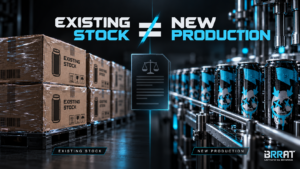
The October 2026 court proceedings distinguish between selling previously manufactured stock and producing new stock using disputed labelling.
Is There an Energy Drink Ban in India in 2026?
No blanket nationwide ban on the sale of all energy drinks has been established by the court developments discussed here.
The dispute concerns the description used for certain products and the regulatory directions issued to specific companies.
There are three different issues that should not be confused.
1. A ban on the product itself
This would mean that the relevant beverage could not lawfully be sold, subject to the exact scope of any applicable order.
That is not the general outcome established by the October 2026 label litigation.
2. A restriction on particular labelling terminology
A product may face restrictions on specific descriptions or representations without its entire product category being prohibited.
This is the central question in the present dispute.
3. Restrictions on manufacturing during litigation
A court may temporarily allow existing stock to be sold while withholding permission to manufacture further stock bearing disputed wording.
This is the distinction affecting PepsiCo’s position in the October proceedings.
Therefore, headlines stating that India has banned every energy drink are misleading.
Likewise, it would be premature to claim that the courts have permanently approved every manufacturer’s use of the description.
The regulatory question has not been finally settled.
How Are Caffeinated Beverages Regulated in India?
India’s food regulations address caffeinated beverages through product standards, ingredient requirements, labelling and rules relating to advertising claims.
Relevant provisions include the Food Safety and Standards (Food Products Standards and Food Additives) Regulations and the Food Safety and Standards (Advertising and Claims) Regulations.
The precise obligations depend on the beverage’s classification and the regulations applicable to that product.
Caffeine content and product standards
FSSAI’s published caffeinated-beverage standards include requirements for caffeine content, composition and specific labelling.
An earlier official compendium, incorporating amendments effective in 2021, describes a caffeine range of 145–300 mg per litre for products covered by its specified caffeinated-beverage standard.
That historical published standard is useful regulatory background. Manufacturers must nevertheless verify the current consolidated rules, applicable amendments and the classification of their own product before treating any range as a compliance test.
There is an important difference between:
- A quantity expressed in milligrams per litre.
- A quantity shown per 100 ml.
- A quantity shown per serving.
- The total caffeine in the complete can or bottle.
Consumers may encounter more than one of these presentations.
The relevant official rules also address caution statements and daily consumption declarations for covered beverages.
Read FSSAI’s published food product standards compendium (PDF).
Advertising claims must be supportable
FSSAI’s advertising and claims regulations require food-related claims to be truthful, understandable and not misleading.
They also restrict claims that encourage excessive consumption.
Consequently, businesses need to assess more than the wording used on the front of a can.
Product websites, influencer advertisements, reels, product listings and other marketing communications can also create impressions about a beverage’s intended effects.
A statement suggesting that a drink guarantees concentration, eliminates tiredness, improves recovery or provides a particular health benefit should not be made without an adequate legal and scientific basis.
This is especially relevant in a category frequently marketed around performance and alertness.
Read FSSAI’s Advertising and Claims Regulations, 2018, including published amendments (PDF).
What Should Consumers Check Before Buying an Energy Drink?
A more useful consumer question than “Does this can say Energy Drink?” is:
What exactly does the product contain, how much am I consuming, and is the information clearly presented?
Here are six useful checks.
1. Caffeine per serving
Read the declared caffeine quantity carefully.
If caffeine is provided per 100 ml, account for the total volume of the container.
Also consider caffeine from tea, coffee, other beverages, supplements or medications.
Different people respond differently to caffeine, and consuming it late in the day can interfere with sleep.
2. Ingredients and functional blends
A beverage may contain caffeine alongside other ingredients such as taurine, amino acids, vitamins or botanical extracts.
The presence of an ingredient does not automatically establish that a finished beverage produces every benefit associated with that ingredient.
Scientific findings depend on the studied dose, formulation, participant group and outcome.
3. Sugar and total energy
An energy drink may provide dietary energy through carbohydrates while also containing caffeine.
These are two different things.
Calories indicate food energy. Caffeine acts primarily as a stimulant.
A beverage containing caffeine should not automatically be treated as a substitute for a balanced meal.
4. Product classification and manufacturer information
Look for the applicable food business information, FSSAI licence details and relevant declarations.
Consumers can consult the official FSSAI website for food regulation information.
An FSSAI licence number is not an endorsement of every advertising promise made for a product.
5. Caution statements
Pay attention to warnings for groups such as children, pregnant or lactating women and individuals who are sensitive to caffeine.
People with medical conditions or concerns about stimulant intake should seek advice from an appropriate healthcare professional.
6. Serving limits
Follow the product’s applicable label directions rather than assuming that every caffeinated beverage has the same recommended consumption quantity.
Responsible consumption depends on the product and the individual.
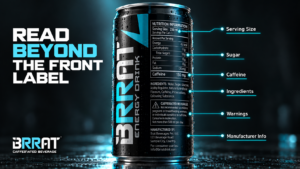
Consumers should examine ingredients, caffeine quantities, nutritional information and warnings rather than relying only on promotional wording.
What Could the FSSAI Energy Drink Dispute Mean for India’s Beverage Industry?
The broader implications extend beyond any single company.
The beverage sector depends on product identity, recognition, packaging, distribution and consistent regulatory expectations.
When an established product description becomes legally disputed, manufacturers may need to reassess several parts of their operations.
Packaging and inventory planning
Large beverage companies often procure cans, bottles, printed sleeves, cartons and other packaging materials in advance.
A change in permitted wording can affect packaging already produced or ordered.
Even where reformulation is unnecessary, implementing new artwork may require coordination with printers, packaging suppliers, production facilities and distributors.
This helps explain why PepsiCo emphasised the operational consequences of the interim restrictions.
Retail and distributor communication
Retailers and distributors need accurate information about what stock they can sell and whether the product’s packaging or naming will change.
Temporary uncertainty can complicate stock planning.
However, a potential shortage raised by a company in court is not evidence that a nationwide shortage has already occurred.
As of 15 October, the supply concern remained a warning about a possible future outcome.
E-commerce and quick-commerce listings
The 2024 FSSAI advisory already demonstrated the importance of correct product categorisation on e-commerce websites.
Online marketplaces use category names, filters, descriptions and product images to help consumers discover beverages.
If relevant regulatory interpretations change, businesses may need to review product listings alongside physical packaging.
Influencer and digital advertising
Modern beverage marketing increasingly uses creator collaborations, short-form video and social media content.
Regulatory scrutiny may extend beyond the product’s formal category name to the impressions created by its marketing.
Claims about stimulation, endurance, focus, fatigue or health benefits must be assessed independently and supported appropriately.
For brands, accurate ingredient information and responsible communication are therefore central to long-term credibility.
Competition and market development
The immediate difference in interim relief between competing manufacturers raises a commercial question.
When one company can continue using familiar labelling while another faces restrictions on fresh production, the market can experience temporary operational differences.
Whether these differences will persist depends on the next court orders and any further lawful regulatory action.
It is too early to conclude that one company has permanently gained a legal or commercial advantage.
What Does This Debate Mean for BRRAT?
For BRRAT, the October 2026 controversy reinforces a simple editorial principle:
Facts over hype.
BRRAT is an Indian beverage brand associated with an active lifestyle, creative culture, long working days and people who embrace unconventional routines.
The brand’s publicly available product information describes beverages containing ingredients including caffeine, taurine, L-theanine, ashwagandha extract and L-arginine.
Its published product range includes BRRAT Classic and BRRAT Watermelon Mojito.
However, a functional ingredient list should never be interpreted as a guarantee of a specific physical or mental outcome.
The appropriate approach is to explain ingredients accurately, make product information accessible and encourage responsible consumption.
Why transparent ingredient information matters
A consumer comparing beverages should be able to find clear answers to questions such as:
- How much caffeine does the drink contain?
- What is the declared serving size?
- Which ingredients are present?
- What warnings apply?
- What is the product’s relevant nutritional profile?
- Are the claims scientifically supportable?
BRRAT’s website provides product and ingredient information for visitors who want to learn more.
Explore BRRAT’s product range or visit the official BRRAT website for currently published product information.
Regulatory clarification: Nothing in the present PepsiCo, Monster, Reliance or Red Bull proceedings establishes the legal classification, labelling compliance or regulatory status of BRRAT products. Those matters require independent assessment of the actual formulation, licence, packaging and applicable law.
This article provides an independent explanation of publicly reported industry developments. It is not a claim that BRRAT is a party to the litigation.
What Happens Next in the Energy Drink Label Court Battle?
As of 15 October 2026, several outcomes remain possible.
Scenario 1: Further interim relief
A court could modify the restrictions governing manufacturing or sale while the underlying dispute continues.
Any such relief would depend on the precise order and the company involved.
Scenario 2: FSSAI follows a fresh regulatory process
Where a previous action was affected by procedural deficiencies, the regulator may reconsider the matter after following applicable legal requirements.
This could include issuing notices, considering representations and making a reasoned decision.
Scenario 3: Clarification of permissible terminology
The proceedings could eventually help clarify how the commercial description “Energy Drink” interacts with product classification and rules concerning potentially misleading representations.
That clarification may be important for manufacturers beyond the companies currently involved.
Scenario 4: Additional changes in packaging or marketing
Businesses might revise their descriptions, packaging or marketing material if future enforceable requirements make such changes necessary.
Whether those changes occur, and their exact scope, cannot be determined from the interim orders alone.
What is confirmed? According to Reuters’ 15 October report, a further hearing was scheduled for 30 October 2026. The available court documents also identify 5 November in the earlier single-judge proceedings.
Readers should rely on later orders for any updated legal position.
Future court orders and regulatory decisions could influence beverage labelling, inventory planning and consumer communication.
BRRAT LAB Verdict: Labels Matter. Facts Matter More.
The India energy drink label dispute 2026 is not simply a disagreement about a popular marketing phrase.
It involves food regulation, the interpretation of earlier official guidance, administrative procedure, business operations and consumer information.
FSSAI’s concerns about misleading labelling deserve examination through the applicable legal framework.
Beverage manufacturers are also entitled to the procedural protections required by law.
The courts are examining these questions while balancing regulatory action with the consequences faced by affected businesses.
For consumers, the immediate lesson is practical.
A beverage’s name does not replace its ingredient list, nutrition panel, caffeine declaration or warnings.
For brands, regulatory clarity and credible communication should matter more than exaggerated promises.
And for India’s growing beverage industry, the next court developments may help establish how familiar commercial terminology can be used within the country’s food regulatory system.
As of 15 October 2026, the dispute is continuing. There is no basis in the developments covered here to claim a blanket nationwide ban on all energy drinks.
The final legal interpretation remains to be determined.
Beyond the Headlines. Know What’s in Your Can.
BRRAT believes that understanding what you drink matters.
Explore the ingredients, nutritional information and available flavours presented on the official website.
Discover the brand, review the available information and make informed choices based on your own needs and caffeine sensitivity.
Explore BRRAT:
- Discover BRRAT Classic and Watermelon Mojito
- Learn about the BRRAT brand
- Explore the BRRAT Journal
- Contact BRRAT for product or business enquiries
BRRAT — SIP THE CHAOS.
Consume responsibly. Caffeinated beverages are not substitutes for adequate sleep, appropriate nutrition or medical treatment. Follow the warnings and consumption instructions on the applicable product label.
Frequently Asked Questions
1. Has FSSAI banned energy drinks in India in 2026?
No blanket nationwide prohibition on all energy drinks has been established by the October 2026 court developments. The dispute concerns restrictions on the “Energy Drink” description used for certain products, along with associated regulatory directions.
2. Why did FSSAI challenge the term “Energy Drink”?
The regulator raised concerns that the description could lead to misbranding or misleading claims for affected beverages. Manufacturers have challenged the directions, including on procedural grounds and by referring to earlier FSSAI guidance.
3. Is Sting Energy banned in India?
The litigation discussed here does not establish a complete nationwide ban on Sting as a beverage. The restrictions specifically concern use of the disputed description and manufacturing under that label. The exact position remains subject to court orders.
4. Can PepsiCo manufacture new Sting Energy stock?
As reported by Reuters on 15 October 2026, the Delhi High Court had not permitted PepsiCo to resume manufacturing new beverages carrying the disputed “Energy Drink” label. Existing stock could be sold under the applicable interim conditions.
5. Why can Red Bull continue using its energy drink label?
Red Bull obtained relief after the Delhi High Court set aside the relevant FSSAI direction on procedural grounds. That relief differed from the interim manufacturing restrictions affecting PepsiCo.
6. Did Monster Energy also challenge FSSAI?
Yes. Monster Energy was among the beverage companies that challenged regulatory directions concerning the “Energy Drink” description and received interim relief in October 2026.
7. What did the FSSAI 2024 advisory say about energy drinks?
The March 2024 advisory said that the expression “Energy” drinks was permitted for products licensed under specified carbonated and non-carbonated water-based flavoured drink categories. It also addressed incorrect e-commerce categorisation and noted that “Health Drink” was not a defined or standardised term under the relevant food law.
8. Are energy drinks and caffeinated beverages the same thing?
Not necessarily in every regulatory context. Caffeinated beverage standards address particular product classifications, while “Energy Drink” may also be used as a commercial description. The applicable product category and legal requirements must be examined.
9. Are energy drinks safe for everyone?
No beverage containing caffeine should be assumed suitable for everyone. Sensitivity and health circumstances vary. Children, pregnant or lactating women and people sensitive to caffeine should observe the relevant product warnings and seek medical guidance where appropriate.
10. What should consumers look for on an energy drink label?
Check the ingredients, caffeine quantity, serving size, nutrition information, applicable warnings and manufacturer details. Marketing slogans alone do not provide enough information to assess the product.
11. Does the FSSAI dispute affect BRRAT?
The reported litigation directly concerns the named companies and their respective regulatory directions. BRRAT’s individual regulatory status cannot be established from those proceedings. Its product classification and labelling must be assessed independently.
12. When is the next Delhi High Court hearing?
Reuters reported a hearing scheduled for 30 October 2026. The earlier PepsiCo single-judge order also lists 5 November 2026 in that proceeding. Consult updated court records because dates and interim orders may change.
Primary Sources and Further Reading
The following references support the legal, regulatory and industry developments discussed in this article.
1. Reuters — 15 October 2026
PepsiCo warns ‘energy drink’ ban could run its India supplies dry as Red Bull sells on
Reporting on the latest Delhi High Court proceedings, PepsiCo’s supply concerns and the different interim positions of major beverage manufacturers.
2. Delhi High Court — 6 October 2026
PepsiCo India Holdings Private Limited v. Union of India & Others, W.P.(C) 14670/2026
Text of the court order explaining the challenge, the regulator’s submissions, the interim stay and the distinction between existing stock and fresh manufacturing.
3. FSSAI — 28 March 2024
Official advisory on health drinks and energy drinks on e-commerce websites
Primary regulatory document explaining the classification terminology relied upon in the 2026 proceedings.
4. Reuters — 29 September 2026
Red Bull wins India court reprieve to use ‘energy drink’ label
Reporting on the procedural grounds underlying Red Bull’s separate court relief.
5. LiveMint — 12 October 2026
Delhi HC refuses immediate relief to PepsiCo on labelling of new Sting stocks
Reporting on the appellate proceedings concerning permission to manufacture new stock.
6. FSSAI — Food Product Standards
Regulatory background on caffeinated beverage composition and labelling. This is a dated compendium; consult current amendments when determining legal compliance.
7. FSSAI — Advertising and Claims
Food Safety and Standards (Advertising and Claims) Regulations — Published Compendium
Rules concerning truthful, non-misleading advertising and product claims.
Editorial methodology: This article distinguishes published court orders, regulatory documents, company submissions reported during litigation, and independently reported news developments. Predictions and possible industry outcomes are identified as possibilities rather than established facts.
Editorial cutoff: 15 October 2026. Future legal developments are not reflected in this version.