Caffeine and taurine benefits for gym performance are back in the scientific spotlight after a new study published on 20 October 2026 examined whether combining these popular energy drink ingredients can improve exercise performance.
Published in the peer-reviewed journal Nutrients, the systematic review and meta-analysis brought together 11 randomized controlled trials involving 234 participants.
Researchers investigated whether consuming caffeine and taurine together influenced exercise endurance, anaerobic power, perceived effort, reaction time and heart rate.
The findings were promising in selected areas.
The combination was associated with greater peak anaerobic power, potentially longer time to exhaustion and lower perceived exertion when compared with placebo.
However, there is an important limitation.
The study did not establish whether adding taurine to caffeine provides extra benefits compared with caffeine alone.
That distinction matters to everyone who has ever wondered whether an energy drink can improve their workout, help them complete more reps or make a demanding training session feel easier.
So, what does the science actually reveal?
Does caffeine help with gym performance? What does taurine do? Can the two ingredients work together? And does their presence in an energy drink mean the finished beverage will reproduce the results of laboratory research?
BRRAT LAB breaks down the evidence, separates proven findings from marketing assumptions and explains what gym-goers should know before choosing a caffeinated beverage.
Primary Research: Effects of Caffeine–Taurine Co-Supplementation on Exercise Performance: A Systematic Review and Meta-Analysis — Nutrients, 20 October 2026
Key Takeaways: Caffeine and Taurine Benefits for Gym Workouts
- New research: A systematic review published on 20 October 2026 analysed 11 randomized controlled trials involving 234 participants.
- Explosive performance: The combination was associated with improved peak or maximal anaerobic power versus placebo, although confidence in the evidence was limited.
- Exercise endurance: Time to exhaustion showed a positive pooled result, but statistical significance was sensitive to reasonable analytical assumptions.
- Workout effort: Participants reported somewhat lower perceived exertion on average, although responses varied across studies.
- Reaction time: The pooled result favoured the combination, but studies differed substantially, making the finding unreliable as a general performance claim.
- Heart rate: Researchers found no statistically clear average difference in the measured exercise heart-rate response.
- Ingredient synergy: The review could not establish whether taurine contributes an additional benefit beyond caffeine.
- BRRAT connection: BRRAT Classic’s published ingredient information includes caffeine and taurine, but the research does not establish the performance of BRRAT’s finished beverage.
- Practical takeaway: Exercise programming, nutrition, hydration, sleep and appropriate recovery remain fundamental to fitness progress.
What Are Caffeine and Taurine?
Before examining the new findings, it helps to understand what the two ingredients actually do.
Caffeine and taurine often appear together in energy drinks and sports-nutrition products, but they are not identical substances and do not have identical roles in the body.
What Is Caffeine?
Caffeine is a naturally occurring stimulant found in coffee, tea and several other plants. It is also used in certain packaged beverages and sports supplements.
Caffeine primarily influences the central nervous system.
One important mechanism involves blocking adenosine receptors. Adenosine is involved in sleepiness and the regulation of wakefulness.
By interfering with adenosine signalling, caffeine can temporarily increase alertness and reduce the perception of fatigue.
In sports science, researchers have investigated caffeine for possible effects on:
- Endurance performance.
- Repeated high-intensity efforts.
- Perceived exertion.
- Selected measures of muscular strength and power.
- Alertness and vigilance.
- Reaction-related tasks.
Caffeine is one of the better-researched substances in sports nutrition.
The US National Institutes of Health Office of Dietary Supplements reports that caffeine can improve performance in certain exercise settings, although effects vary according to the activity, dose, individual and testing conditions.
Read: NIH — Dietary Supplements for Exercise and Athletic Performance
What Is Taurine?
Taurine is a naturally occurring amino-sulfonic compound present in the human body.
It is found in several tissues, including skeletal muscle, and is obtained through normal physiological processes and certain foods.
Unlike caffeine, taurine is not generally classified as a central nervous system stimulant.
Taurine participates in physiological processes associated with:
- Calcium regulation in muscle cells.
- Cell membrane function.
- Osmotic balance.
- Cellular signalling.
- Other aspects of normal tissue function.
Researchers have explored whether taurine supplementation influences exercise performance, muscular function and fatigue-related outcomes.
However, the presence of taurine in a beverage does not automatically establish an improvement in endurance, muscle growth or recovery.
Caffeine has comparatively stronger evidence for selected exercise-performance effects. Taurine remains an active research topic, particularly when combined with caffeine.
A 2025 meta-analytic review of taurine alone found possible small-to-moderate exercise-performance effects, but also highlighted inconsistency and uncertainty in whether those findings would be reproduced.
Read: Does One Shot Work? The Acute Impact of a Single Taurine Dose on Exercise Performance
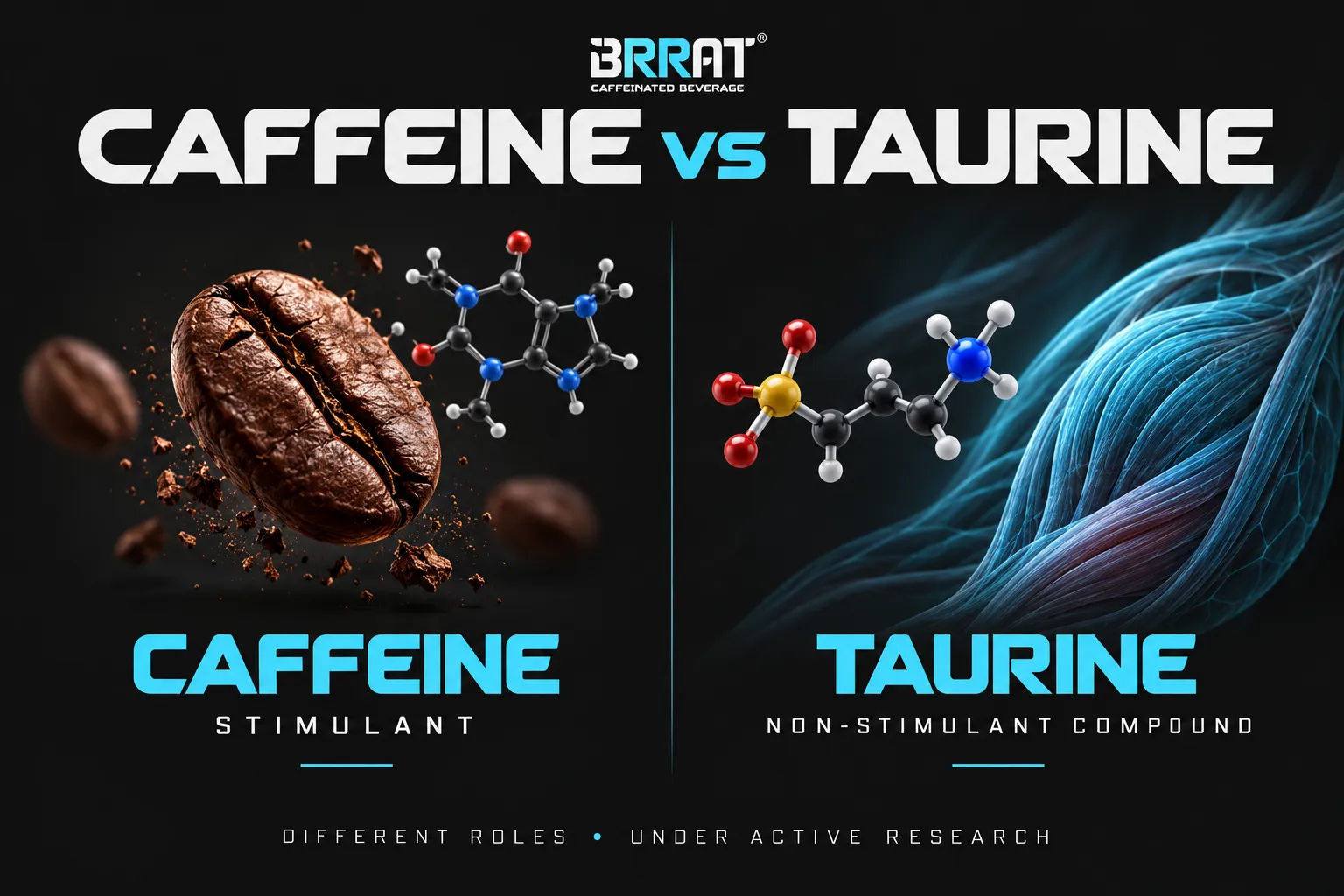
Caffeine and taurine are different substances, even though they frequently appear together in energy drinks.
Caffeine and Taurine Benefits: What Does the New October 2026 Study Actually Show?
On 20 October 2026, researchers led by Bingbing He published a systematic review and meta-analysis in Nutrients.
The study was titled:
Effects of Caffeine–Taurine Co-Supplementation on Exercise Performance: A Systematic Review and Meta-Analysis.
The research team searched major scientific databases for randomized controlled trials investigating caffeine and taurine consumed together.
The literature search included studies available through 1 June 2026.
Researchers then combined results across exercise-related outcomes.
How Was the Research Conducted?
| Research detail | Finding |
|---|---|
| Publication date | 20 October 2026 |
| Journal | Nutrients |
| Research type | Systematic review and meta-analysis |
| Randomized trials included | 11 |
| Total participants | 234 |
| Population | Predominantly young, healthy adults |
| Main comparison | Caffeine + taurine versus placebo |
| Key outcomes | Time to exhaustion, peak power, perceived exertion, reaction time and heart rate |
| Main limitation | Did not establish ingredient-specific or synergistic effects |
The researchers used statistical models to estimate average differences between intervention and placebo conditions.
They also assessed study quality, risk of bias, differences between study results and certainty of evidence.
This is an important advantage over relying on one small laboratory experiment.
However, pooling small trials does not automatically remove their limitations.
The results still depend on the quality of the underlying experiments.
Were Commercial Energy Drinks Tested?
Not in a way that would justify broad claims about every commercial beverage.
Most of the included studies used caffeine and taurine provided in controlled experimental formulations, often capsules.
One study involved a commercial multi-ingredient product, which the researchers considered separately for an expanded peak-power analysis.
Those products can contain additional ingredients that may influence outcomes.
Therefore, findings from a caffeine-and-taurine experiment should not automatically be attributed to an entire energy drink formulation.
This is especially important when comparing scientific supplement doses with the amounts found in retail beverages.
What Were the Five Main Findings?
The 2026 review examined five major outcomes.
| Performance outcome | Reported pooled estimate | What it means |
|---|---|---|
| Peak/maximal anaerobic power | SMD +0.55 | Favoured the combination compared with placebo |
| Time to exhaustion | SMD +0.54 | Possible improvement, but sensitive to analytical assumptions |
| Perceived exertion | SMD −0.44 | Some evidence of lower reported workout effort |
| Reaction time | SMD −1.49 | Pooled result favoured the combination, but very inconsistent |
| Heart rate | −0.11 beats/minute | No statistically clear average difference |
SMD means standardized mean difference, a statistical measure used to compare study outcomes. These values are not percentage improvements and should not be interpreted as a specific increase in weights lifted, repetitions completed or minutes of exercise.
The most useful takeaway is not that every measurement improved.
It is that certain exercise-performance measures showed potentially favourable differences, while other findings were uncertain or inconsistent.
The researchers rated the certainty of evidence as:
- Low for peak power and time to exhaustion.
- Moderate for perceived exertion and heart rate.
- Very low for reaction time.
These certainty ratings are essential when deciding how confidently to communicate the findings.
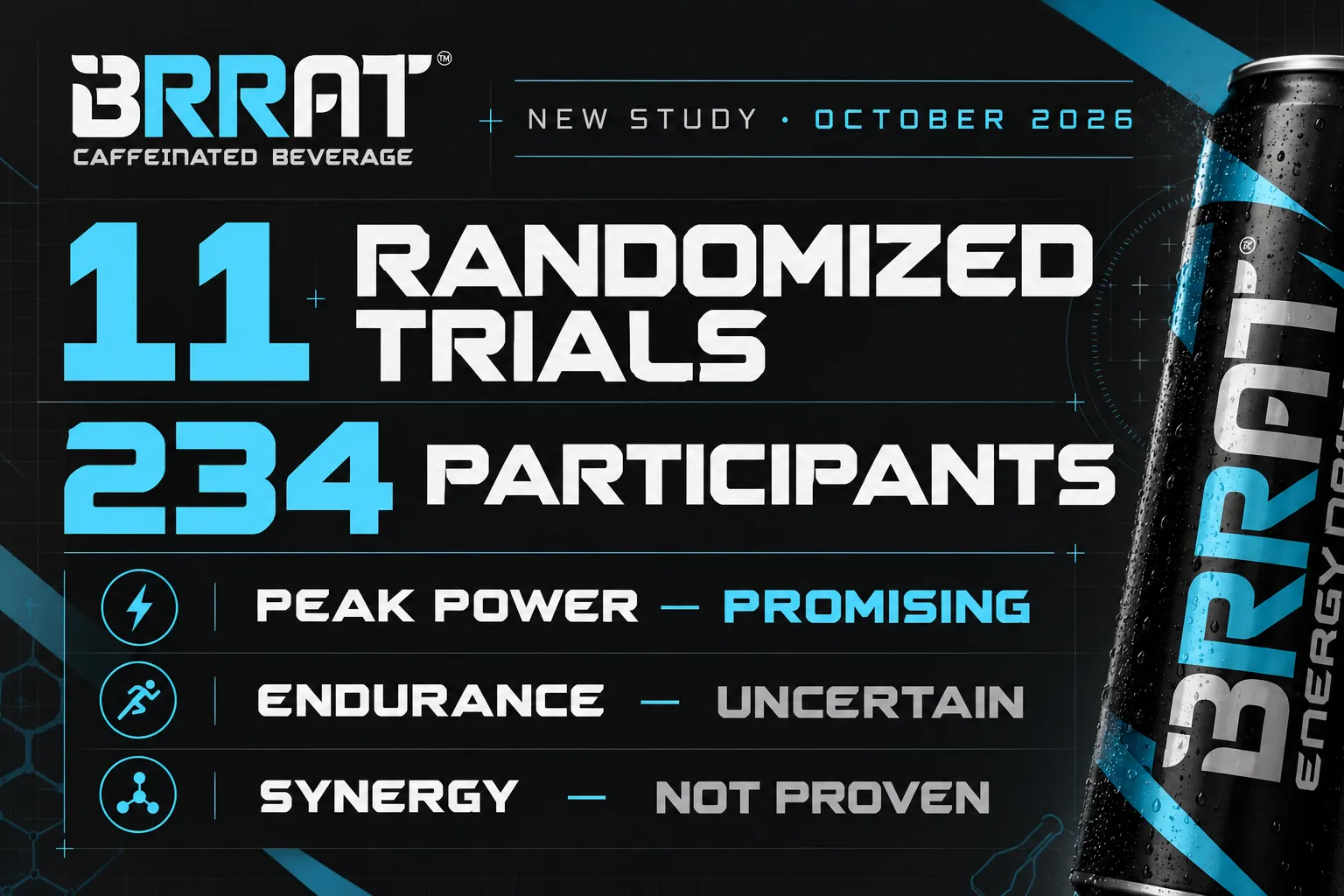
The October 2026 systematic review found encouraging signals for certain exercise outcomes but could not establish caffeine–taurine synergy.
Can Caffeine and Taurine Improve Explosive Gym Performance?
Explosive power was one of the more promising outcomes in the October 2026 analysis.
Peak or maximal anaerobic power refers to the highest power generated during a short, high-intensity exercise effort under a particular testing protocol.
For example, laboratory tests may involve short bouts of maximal cycling or other controlled power assessments.
The new review reported a pooled standardized mean difference of 0.55, favouring caffeine and taurine compared with placebo.
The 95% confidence interval was 0.21 to 0.89.
The direction of the pooled result suggests a possible benefit under the tested conditions.
Does That Mean You Can Lift Heavier Weights?
Not necessarily.
An improvement in a laboratory anaerobic-power measurement is not equivalent to proving that someone can:
- Increase their bench-press one-repetition maximum.
- Deadlift more weight.
- Complete additional repetitions.
- Build muscle faster.
- Increase training volume every session.
These are different outcomes requiring their own direct evidence.
A short-cycle power test and a maximum barbell lift place different demands on the body.
Therefore, the most scientifically defensible conclusion is:
Caffeine and taurine together may support certain short-duration power outcomes compared with placebo, but the study does not prove a universal improvement in weightlifting performance.
What About the Commercial Product Analysis?
The researchers also carried out an expanded analysis that included a multi-ingredient commercial energy product.
The pooled estimate became 0.48, compared with 0.55 in the more narrowly defined primary analysis.
The researchers cautioned that the expanded result reflected the tested product as a whole.
It could not be attributed exclusively to caffeine and taurine.
That distinction is particularly relevant for beverage brands and consumers comparing product formulations.
Does the Combination Improve Workout Endurance?
Another important finding concerned time to exhaustion.
Time to exhaustion measures how long a participant can continue a specific exercise task before reaching the defined stopping point.
In the primary analysis, caffeine and taurine together were associated with longer time to exhaustion than placebo.
The reported standardized mean difference was 0.54.
However, this result came from only three contributing studies.
More importantly, its statistical interpretation changed when the researchers tested alternative assumptions used to analyse certain crossover trials.
Under those sensitivity analyses, the confidence interval crossed the point representing no effect.
Why Does That Matter?
A positive result can be interesting without being sufficiently stable to support a strong conclusion.
The original estimate suggests that a potential benefit may exist.
The sensitivity analyses show that the available evidence does not establish that benefit with high confidence.
It would therefore be inaccurate to claim:
“Caffeine and taurine guarantee longer workouts.”
A more accurate statement is:
The combination may improve time to exhaustion in some exercise settings, but additional well-controlled research is needed.
What About Cardio and High-Intensity Training?
For activities such as cycling, repeated intervals and some endurance-based exercise protocols, caffeine itself already has a substantial research history.
However, this does not prove that adding taurine necessarily improves every outcome beyond caffeine alone.
The distinction becomes important when consumers compare an ordinary caffeinated beverage with a more complex sports-nutrition formulation.
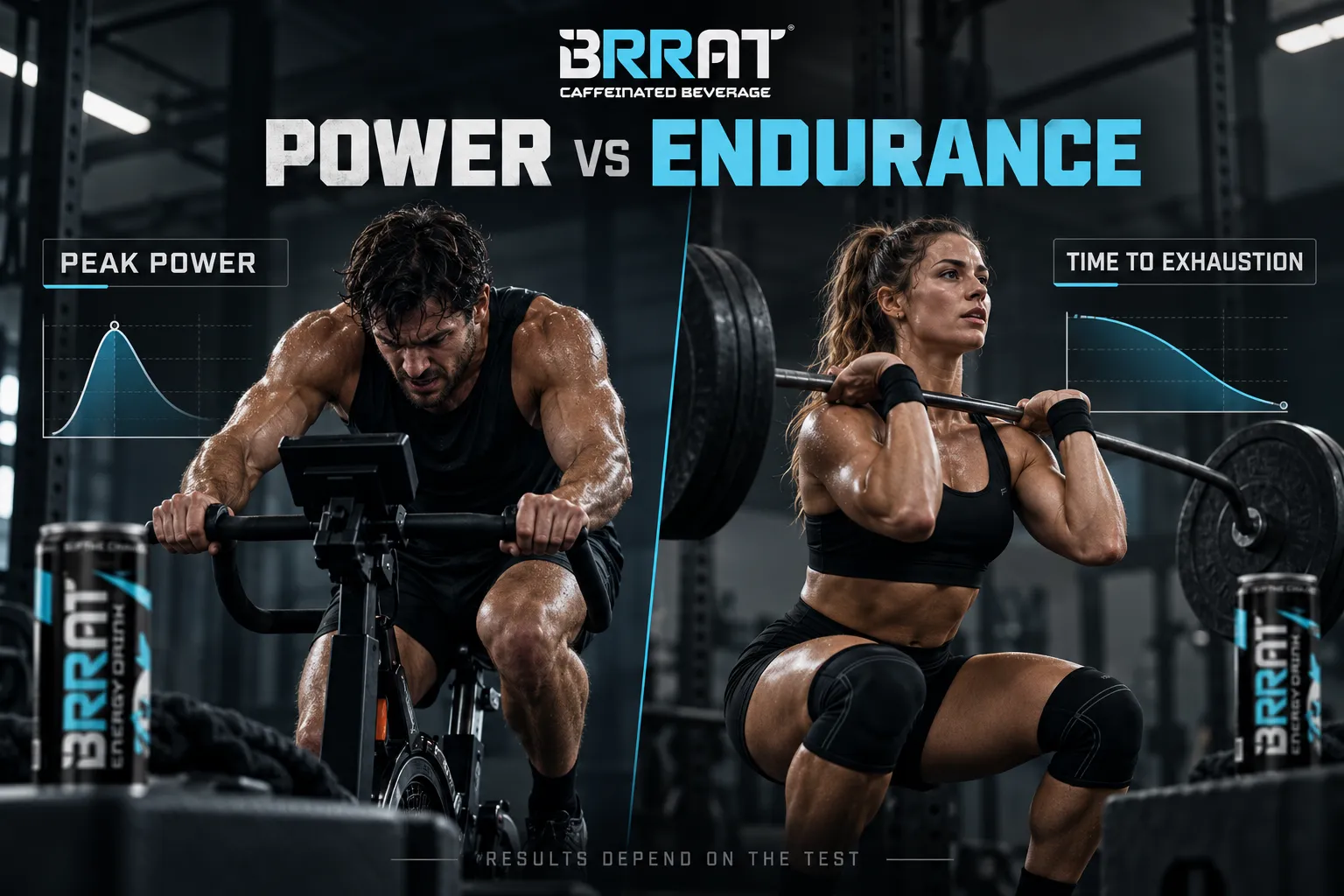
Peak anaerobic power and time to exhaustion represent different exercise outcomes with different levels of scientific certainty.
Can Caffeine and Taurine Make Workouts Feel Easier?
One of the most practically interesting findings involved the rating of perceived exertion, often abbreviated RPE.
RPE is a measure of how physically demanding an exercise feels to the participant.
Imagine performing two workout sessions that involve similar external workloads.
One session might feel substantially harder than the other.
Researchers use standardized scales to measure that perceived effort.
What Did the Study Find?
The pooled analysis reported a standardized mean difference of −0.44 for RPE, favouring caffeine and taurine compared with placebo.
This suggested that participants sometimes perceived exercise as less demanding.
However, results varied across studies, and the prediction interval included the possibility of no benefit or a different outcome in future settings.
Does Lower RPE Mean Faster Muscle Growth?
No.
Feeling less fatigued during a workout is not the same as demonstrating:
- Greater muscle hypertrophy.
- Improved long-term strength.
- Faster physiological recovery.
- Better overall training adaptation.
Long-term improvements depend on appropriate training stimulus, progression, nutrition, recovery and consistency.
A substance that changes the perception of effort should not be treated as a replacement for those fundamentals.
For gym-goers, the finding is interesting because perceived exertion can influence the experience of demanding sessions.
But it remains an exercise-response finding rather than evidence of guaranteed long-term results.
Does the Combination Improve Focus or Reaction Time?
Reaction time was another outcome investigated in the new review.
The pooled estimate favoured the caffeine-and-taurine intervention.
However, the results differed dramatically between individual studies.
The researchers reported very high statistical heterogeneity of approximately 90.6%.
That means the findings were far from uniform.
The prediction interval included both potentially favourable and unfavourable effects.
The certainty of evidence was rated very low.
What Does This Mean for Training?
Certain activities require rapid responses:
- Reacting to a moving ball.
- Coordinating movements during sport.
- Responding to changing exercise conditions.
- Performing reaction-based drills.
But the evidence does not justify claiming that caffeine and taurine together consistently improve reaction time across every activity.
Nor does it establish that an energy drink will improve gaming accuracy, reflexes or gym coordination simply because it contains those ingredients.
Readers interested in the separate research on caffeine and L-theanine can explore BRRAT’s existing article:
Caffeine + L-Theanine: The Focus Combo Explained (No Jitters, No Hype)
That article examines different ingredients and primarily cognitive outcomes.
The two research topics should not be treated as interchangeable.
Is Caffeine Plus Taurine Better Than Caffeine Alone?
This is arguably the most important question in the entire article.
The October 2026 meta-analysis does not establish that caffeine combined with taurine is more effective than caffeine alone.
The review primarily compared the combined intervention against placebo.
It was not designed to estimate the independent contribution of each ingredient.
Imagine three possible explanations for a positive outcome:
- Caffeine produces most or all of the observed difference.
- Taurine contributes an additional effect.
- The two ingredients interact under particular conditions.
The October review cannot reliably distinguish between those possibilities.
What Did Earlier Research Suggest?
In October 2025, researchers published a systematic review and Bayesian network meta-analysis examining caffeine, taurine and their combination.
The analysis suggested potential benefits from the combination for certain anaerobic and reaction-time outcomes.
However, those results also depended on the studies and statistical comparisons available.
They do not establish an unrestricted performance advantage for every dose, population or exercise type.
Read the 2025 network meta-analysis on PubMed.
What About the July 2026 Trial?
An individual randomized crossover study published in July 2026 investigated low-dose caffeine and taurine separately and together.
The study involved 32 resistance-trained male participants.
Researchers compared:
- Caffeine alone.
- Taurine alone.
- Caffeine plus taurine.
- Placebo.
The combined condition improved selected outcomes, including average anaerobic power compared with caffeine alone.
However, the investigators did not find statistically significant differences across every performance measurement.
This study provides an interesting direct comparison, but 32 participants are not enough to settle the broader question for all athletes.
It was also published after the literature-search cutoff of the October review.
Read the July 2026 randomized trial.
What Research Is Still Needed?
Future studies would benefit from directly comparing four controlled groups:
| Group | Intervention |
|---|---|
| A | Placebo |
| B | Caffeine alone |
| C | Taurine alone |
| D | Caffeine + taurine |
Researchers would also need to examine different doses, training backgrounds, sexes, exercise types and repeated training sessions.
Those comparisons would help determine whether any apparent benefit arises from caffeine, taurine or the interaction between them.
BRRAT LAB takeaway: A researched combination is not automatically a proven synergistic combination.
Does Caffeine or Taurine Help Build Muscle?
Many gym beginners search for caffeine and taurine benefits because their main objective is muscle growth.
However, improved exercise performance and muscle hypertrophy are not identical outcomes.
What Actually Drives Muscle Growth?
Long-term muscle development is influenced by factors including:
- Appropriate resistance-training stimulus.
- Progressive training overload.
- Adequate protein and overall nutrition.
- Sufficient recovery.
- Consistent training over time.
Caffeine may influence particular acute exercise outcomes, but it is not a substitute for training or nutrition.
Likewise, the October 2026 review did not demonstrate that caffeine-and-taurine supplementation directly increases muscle size.
Can Better Workout Performance Indirectly Matter?
Potentially, if an intervention genuinely helps someone perform useful additional training over time.
But this possibility requires evidence linking the intervention to long-term training adaptations.
The new study primarily examined shorter-term exercise outcomes.
It did not establish that consuming caffeine and taurine produces greater muscle growth over weeks or months.
Anyone trying to build muscle should prioritise a realistic training programme, adequate nutrition and sustainable recovery rather than assuming an ingredient combination will produce hypertrophy independently.
Does Taurine Improve Muscle Recovery?
Taurine has been investigated for physiological processes related to muscle function and cellular regulation.
Some experimental research has examined exercise-related fatigue and recovery-associated outcomes.
However, results remain variable.
The October 2026 meta-analysis was not a comprehensive trial of post-workout muscle recovery.
It did not establish that the caffeine-and-taurine combination:
- Eliminates delayed-onset muscle soreness.
- Speeds up muscle repair.
- Prevents exercise-related injury.
- Replaces rest days.
- Restores muscle glycogen.
- Guarantees faster recovery after intense training.
Those claims require specific evidence.
It is therefore more accurate to discuss taurine as an ingredient with physiological functions and an evolving evidence base than to call it a proven recovery solution.
For recreational gym-goers, sensible recovery still includes adequate sleep, appropriate nutrition, hydration and recovery time between demanding sessions.
Caffeine and Taurine Before a Workout: Does Timing Matter?
Timing is another commonly searched question.
Researchers often administer caffeine before exercise to evaluate short-term effects on performance.
In sports-nutrition research, caffeine has frequently been studied at doses of approximately 2–6 mg per kilogram of body weight.
However, those experimental doses should not be interpreted as a recommendation for everyone to consume such quantities.
Some research protocols use relatively high caffeine doses that may not be appropriate for particular individuals.
What About 30–60 Minutes Before Exercise?
Many controlled caffeine studies administer the ingredient around an hour before exercise.
Nevertheless, an ideal timing strategy cannot be assumed for every person or formulation.
The response depends on:
- Caffeine amount.
- Individual sensitivity.
- Previous caffeine consumption.
- Product formulation.
- Exercise type.
- Timing relative to sleep.
- Other relevant health factors.
The October 2026 meta-analysis did not establish one universally optimal timing or dose for caffeine-and-taurine combinations.
Should You Consume Caffeine Before an Evening Gym Session?
Consider your sleep schedule first.
Evening caffeine intake may interfere with sleep for some individuals.
The European Food Safety Authority notes that a single caffeine dose of 100 mg may affect sleep duration or patterns in certain adults, particularly when consumed near bedtime.
A workout that feels easier in the short term does not necessarily justify disrupting sleep and recovery.
Read EFSA’s caffeine safety assessment.
How Much Caffeine Is Considered Safe?
Caffeine sensitivity differs significantly between people.
The US Food and Drug Administration cites 400 mg of caffeine per day as an amount not generally associated with negative effects for most healthy adults.
That is not a recommended daily target, a guarantee of safety or a limit suitable for every person.
EFSA has also assessed individual caffeine doses of up to 200 mg and daily intakes of up to 400 mg for generally healthy adults under specified conditions.
These assessments come from international authorities and should not override the applicable Indian product label or specific medical advice.
Potential Effects of Excessive Caffeine
Depending on the amount consumed and individual sensitivity, caffeine can contribute to:
- Difficulty sleeping.
- Restlessness.
- Nervousness or anxiety.
- Palpitations or increased heart rate.
- Digestive discomfort.
- Headaches and other undesirable symptoms.
Caffeine from coffee, tea, soft drinks, energy drinks, supplements and other products can add to total daily intake.
Particular caution is important for children, pregnant or lactating women, people sensitive to caffeine and individuals with medical conditions or medications that may interact with stimulants.
Read: US FDA — Spilling the Beans: How Much Caffeine Is Too Much?
What Does FSSAI Say?
In India, caffeinated beverages are subject to the applicable Food Safety and Standards Authority of India regulations, including relevant composition and labelling requirements.
The published regulatory standards address ingredients including caffeine and taurine and specify applicable declarations and warning requirements for covered beverages.
Consumers should read the current product label for the applicable serving instructions and warnings.
An ingredient’s presence in a product does not constitute regulatory approval of every performance or health claim associated with that ingredient.
Official FSSAI food product standards compendium
For the current legal position, including later amendments, consult FSSAI’s official website.
How Much Caffeine and Taurine Does BRRAT Contain?
BRRAT includes caffeine and taurine among the functional ingredients presented on its official website.
The brand also identifies ingredients including L-theanine, ashwagandha extract and L-arginine.
According to the currently published BRRAT Classic nutritional information, the following amounts are listed per 100 ml.
| Ingredient | Per 100 ml | Equivalent in 250 ml |
|---|---|---|
| Caffeine | 30 mg | 75 mg |
| Taurine | 400 mg | 1,000 mg |
| L-Theanine | 39.40 mg | 98.50 mg |
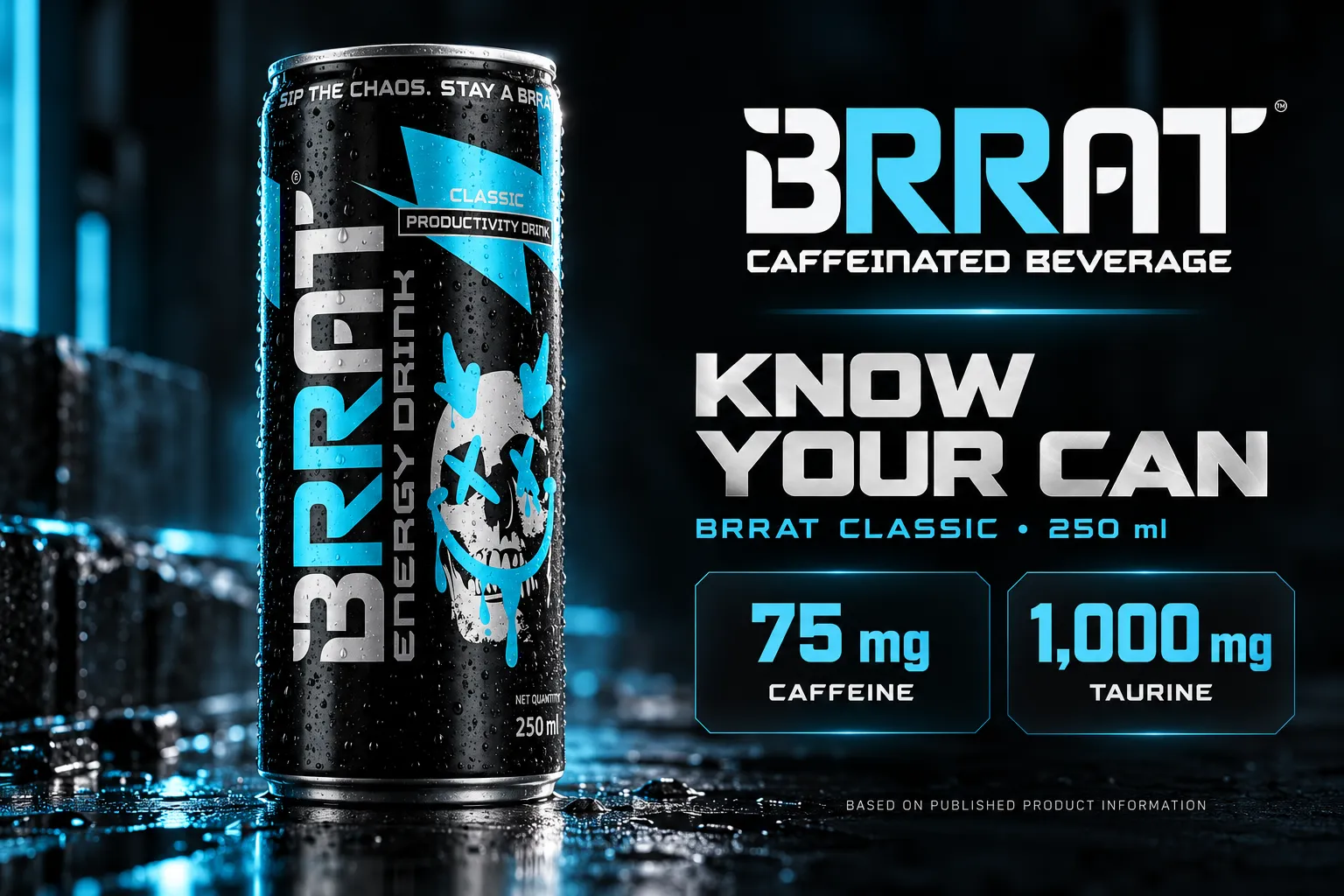
Based on BRRAT Classic’s published per-100 ml ingredient information, a 250 ml serving contains 75 mg caffeine and 1,000 mg taurine.
Source: BRRAT official website — published Classic nutritional information. The 250 ml amounts are calculated from the published per-100 ml figures. Check the actual can label and current approved product information before using these amounts in advertising or on updated packaging.
These figures are useful because they allow consumers to understand the ingredient quantities rather than relying exclusively on descriptive marketing language.
Is BRRAT the Same as the Formulations Studied in 2026?
No such equivalence has been established.
Although BRRAT Classic contains caffeine and taurine, the studies in the October analysis investigated specific experimental preparations and doses.
The complete BRRAT formula also contains additional ingredients.
Therefore, it would be inaccurate to claim that the new meta-analysis proves BRRAT will:
- Increase someone’s maximum lifting capacity.
- Deliver a particular percentage improvement in power.
- Reduce perceived exertion by a guaranteed amount.
- Improve workout endurance for every consumer.
- Produce a proven caffeine–taurine synergy.
- Improve muscle growth or recovery.
The scientific findings should be understood as evidence about the tested interventions rather than as clinical or performance validation of BRRAT’s finished beverage.
Why BRRAT LAB Discusses Ingredient Science
BRRAT LAB is built around a simple principle:
FACTS OVER HYPE.
Understanding an ingredient starts with asking what researchers actually measured.
A promising scientific finding deserves attention.
An uncertain result deserves transparency.
And a marketing statement should never go further than the evidence can reasonably support.
Explore the brand’s current flavours and ingredient information:
Discover BRRAT Classic and Watermelon Mojito
For more evidence-based ingredient education, read:
Caffeine + L-Theanine: The Focus Combo Explained
BRRAT — NOT MADE FOR NORMAL.
Energy Drink vs Pre-Workout: What Should Gym-Goers Understand?
Energy drinks and pre-workout supplements may share certain ingredients, but they should not automatically be treated as interchangeable.
A packaged energy drink may contain caffeine alongside carbohydrates, flavouring ingredients, sweeteners, amino acids or other substances.
A pre-workout supplement may contain a different combination of ingredients, with different serving sizes and amounts.
Understanding the Difference
| Factor | Packaged energy drink | Pre-workout supplement |
|---|---|---|
| Primary format | Ready-to-drink beverage | Often powder, capsule or another supplement format |
| Caffeine | Depends on product | Depends on formulation |
| Taurine | Present in some products | Present in some formulations |
| Carbohydrates | May be present | Depends on product |
| Intended use | Varies by product | Frequently designed around exercise use |
| Performance evidence | Requires product-specific assessment | Requires ingredient- and product-specific assessment |
| Safety | Check actual caffeine and other ingredients | Check actual caffeine and other ingredients |
The category name alone cannot determine whether one option is stronger, safer or better for an individual.
A product with more caffeine is not automatically more effective.
The NIH notes that higher caffeine amounts may increase unwanted effects without proportionately improving exercise outcomes.
Five Questions Worth Asking Before Using a Caffeinated Product for Training
- How much caffeine does one complete serving contain?
- What other caffeine sources have I already consumed?
- Am I sensitive to stimulant-related effects?
- Is the product appropriate for the type and timing of my activity?
- Could consuming it interfere with my sleep or recovery?
These questions are more useful than choosing a product based on the most aggressive performance slogan.
Five Common Myths About Caffeine and Taurine
Myth 1: Caffeine and Taurine Always Work Better Together
Reality: The combination has shown promising results, but the October 2026 review could not establish that it consistently outperforms caffeine alone.
Some separate studies have investigated direct comparisons, but the overall evidence remains insufficient for a universal claim.
Myth 2: Taurine Is Just Another Stimulant
Reality: Taurine is not generally classified as a stimulant like caffeine.
It participates in normal physiological functions, and its possible exercise-related effects are being studied through different mechanisms.
Myth 3: More Caffeine Means More Gym Performance
Reality: Performance outcomes do not necessarily improve proportionately with higher caffeine intake.
Increasing the dose can raise the likelihood of unwanted effects.
Individual sensitivity and total daily exposure matter.
Myth 4: Feeling Less Tired Means You Have Recovered Faster
Reality: Perceived exertion and physiological recovery are different outcomes.
Feeling less fatigued during exercise does not prove faster muscle repair or improved long-term recovery.
Myth 5: Every Energy Drink With Caffeine and Taurine Has Proven Gym Benefits
Reality: A study of isolated or controlled ingredients does not automatically establish the effect of a finished commercial beverage.
Dose, formulation, additional ingredients and exercise conditions all matter.
This is why accurate ingredient declarations and product-specific evidence are important.
What Should Gym Beginners Take From the New Research?
For someone beginning a fitness routine, the findings can be interesting without becoming the centre of their programme.
Building a useful training routine generally involves:
1. Consistency
Training regularly and progressing appropriately matter more than relying on short-term stimulation.
2. Nutrition
A suitable overall diet supports energy needs, training and recovery.
3. Hydration
Fluid requirements depend on exercise conditions, personal circumstances and sweat losses.
4. Sleep
Adequate sleep supports general wellbeing and recovery. Caffeine does not eliminate the need for sleep.
5. Ingredient awareness
Anyone choosing caffeinated beverages should read the actual label and understand the total amount being consumed.
6. Realistic expectations
A positive laboratory result is not a promise of a personal-record lift.
The broader message is that gym performance has multiple influences.
No single beverage should be treated as the foundation of a successful training programme.
What Does the Latest Research Prove — and What Remains Uncertain?
| Claim | Evidence-based assessment |
|---|---|
| Caffeine has been studied extensively for exercise performance | Well supported |
| Caffeine and taurine together can influence selected exercise outcomes versus placebo | Promising but limited evidence |
| The combination improves peak anaerobic power under some tested conditions | Positive pooled finding, low certainty |
| The combination reliably extends exercise endurance | Not established |
| Taurine always improves caffeine’s effects | Not established |
| The combination consistently improves reaction time | Not established |
| The combination directly increases muscle growth | Not established by the new review |
| The combination guarantees faster muscle recovery | Not established by the new review |
| BRRAT contains caffeine and taurine | Supported by published product information |
| The new study proves BRRAT improves gym performance | Not established |
This distinction between observed evidence and unsupported extrapolation is central to responsible science communication.
Current research provides promising evidence for selected performance outcomes, while ingredient-specific and synergistic effects remain uncertain.
Final Verdict: Are Caffeine and Taurine Benefits for Gym Performance Real?
The scientific evidence is promising, but more limited than many energy-drink performance claims might suggest.
The systematic review published on 20 October 2026 found that caffeine-and-taurine co-supplementation was associated with certain favourable exercise outcomes compared with placebo.
Peak anaerobic power showed a positive pooled result.
Time to exhaustion also showed a potential benefit, although the result was sensitive to analytical assumptions.
Perceived exertion was somewhat lower on average, but results were not uniform across settings.
Reaction-time evidence remained highly inconsistent, and heart-rate outcomes did not show a clear average difference.
Most importantly, the researchers could not determine how much of the observed effect came from caffeine, taurine or their interaction.
The review was based on relatively small studies involving mostly young adults.
It should not be treated as proof that every energy drink containing these ingredients delivers the same benefits.
What Does This Mean for Everyday Gym-Goers?
If your goal is improving physical fitness, focus on the fundamentals first.
Training quality, nutrition, adequate recovery and consistency remain important.
If you consume caffeine, understand the dose, your individual tolerance and its possible effect on sleep.
And when you read claims about performance-enhancing ingredients, look beyond slogans.
Ask whether the research studied the same dose, formulation, outcome and population relevant to the claim.
That is the real lesson from the latest caffeine-and-taurine research.
Not every promising result becomes a proven consumer benefit.
But good evidence is worth understanding.
BRRAT LAB — FACTS OVER HYPE.
Know What’s Inside. Discover BRRAT.
From demanding workdays to an active lifestyle, BRRAT brings together ingredients that consumers may want to understand before choosing a beverage.
Explore the current product information, available flavours and brand story.
- Explore BRRAT Classic and Watermelon Mojito
- Read More From the BRRAT Journal
- Explore Gym & Grind Articles
- Discover BRRAT LAB Science Articles
- Learn About BRRAT
- Contact BRRAT
SIP THE CHAOS.
Consume responsibly. Follow the warnings and serving instructions on the product label. Caffeinated beverages are not substitutes for sleep, balanced nutrition, appropriate recovery or medical treatment.
Frequently Asked Questions About Caffeine and Taurine Benefits
1. What are the main caffeine and taurine benefits for gym workouts?
Research suggests that consuming caffeine and taurine together may improve selected exercise outcomes compared with placebo. A meta-analysis published in October 2026 reported favourable pooled findings for peak anaerobic power and perceived exertion, with a more uncertain result for time to exhaustion. However, the evidence remains limited, and the review could not establish whether taurine provides benefits beyond caffeine alone. Results should not be interpreted as guaranteed improvements in ordinary gym workouts.
2. Is caffeine and taurine a good combination before a workout?
The combination has been investigated in controlled exercise studies, and some findings are promising. However, whether it is appropriate for a particular person depends on the dose, formulation, individual caffeine sensitivity, training activity and relevant health factors. The latest research does not establish one universally optimal combination or dose. Anyone considering a caffeinated product should review its label and account for other caffeine sources rather than assuming the combination is automatically beneficial.
3. Does taurine improve strength or muscle growth?
Taurine has been studied in relation to muscle function and selected exercise outcomes, but evidence does not establish that it reliably increases strength or muscle size in everyday gym users. The October 2026 review found favourable results for certain power measurements when taurine and caffeine were consumed together. Those outcomes are not identical to maximal lifting strength or long-term hypertrophy. Muscle development continues to depend heavily on suitable training, nutrition, recovery and consistency.
4. Is caffeine plus taurine better than caffeine alone?
That remains unresolved. The October 2026 review primarily compared caffeine-and-taurine co-supplementation against placebo and could not isolate the contribution of each ingredient. A separate July 2026 randomized trial found that the combination improved selected power outcomes compared with caffeine alone, but that individual study involved only 32 resistance-trained men. Further well-designed trials involving more participants and different exercise protocols are needed before making a broad superiority claim.
5. Can caffeine and taurine improve workout endurance?
The October 2026 meta-analysis reported a positive pooled finding for time to exhaustion, suggesting a possible benefit in some exercise settings. However, the evidence came from only three contributing studies, and the statistical significance changed under alternative analytical assumptions. That limits confidence in the result. It would therefore be premature to promise longer workouts, greater running endurance or additional exercise repetitions to everyone consuming the combination.
6. Does taurine reduce caffeine jitters?
The October 2026 exercise review did not establish that taurine reliably eliminates caffeine-related jitteriness. Caffeine can cause restlessness, nervousness and other unwanted effects in sensitive individuals. Whether another ingredient meaningfully changes those effects requires specific studies comparing the relevant outcomes and doses. Consumers should not assume that adding taurine makes a high-caffeine product free from stimulant-related side effects.
7. How much caffeine is in a 250 ml BRRAT Classic can?
BRRAT’s published Classic nutritional information lists 30 mg caffeine per 100 ml. That equals 75 mg in a 250 ml serving. The same published information lists taurine at 400 mg per 100 ml, equivalent to 1,000 mg per 250 ml. These calculations describe ingredient quantities, not guaranteed performance outcomes. Always check the actual product label and current approved formulation for the latest information.
8. Can I drink an energy drink before going to the gym?
Caffeinated beverages are used by some adults around exercise, but whether a particular product is appropriate depends on its ingredients, caffeine content, your individual sensitivity and relevant health considerations. Caffeine can affect sleep and may produce unwanted effects in certain people. Follow the label warnings and serving instructions. A beverage containing caffeine should not be assumed to provide a proven sports-performance benefit simply because it is consumed before training.
9. Does caffeine and taurine help with muscle recovery?
The October 2026 review did not establish faster muscle recovery as an outcome of caffeine-and-taurine supplementation. It focused on measurements such as power, time to exhaustion, perceived exertion, reaction time and heart rate. These measurements are different from muscle repair, soreness resolution or long-term adaptation. Although taurine is involved in physiological processes relevant to muscle function, claims of guaranteed post-workout recovery require separate evidence.
10. What did the October 2026 caffeine and taurine study conclude?
The review, published in Nutrients on 20 October 2026, analysed 11 randomized trials involving 234 participants. It found possible favourable effects for selected exercise-performance measurements when caffeine and taurine were consumed together versus placebo. However, the researchers highlighted limitations including small studies, variable findings and uncertain ingredient-specific effects. Their conclusion supports further investigation rather than claims that the combination consistently improves every type of physical performance.
Research Sources and Further Reading
BRRAT LAB prioritises original research, systematic reviews and established regulatory or public-health information.
1. He B. and colleagues — Nutrients, 20 October 2026
The primary study examined in this article. Includes 11 randomized trials involving 234 participants and evaluates exercise-performance outcomes.
2. Köse Y. and colleagues — July 2026
A randomized, placebo-controlled crossover study involving 32 resistance-trained men. Useful for understanding selected direct comparisons between caffeine, taurine, their combination and placebo.
3. Deng H. and colleagues — 2025
Earlier research examining potential individual and combined effects across performance and cognitive outcomes.
4. Taurine Supplementation Meta-Analysis — 2025
Does One Shot Work? The Acute Impact of a Single Taurine Dose on Exercise Performance
A meta-analytic review examining acute taurine supplementation and exercise performance.
5. US National Institutes of Health
Dietary Supplements for Exercise and Athletic Performance
Evidence-based information about caffeine and other ingredients investigated for exercise performance.
6. European Food Safety Authority
Caffeine: Scientific Safety Assessment
Information on caffeine intake, sensitivity, single-dose considerations and potential effects on sleep.
7. US Food and Drug Administration
Spilling the Beans: How Much Caffeine Is Too Much?
Public-health guidance on caffeine quantities and potential unwanted effects.
8. Food Safety and Standards Authority of India
Food Product Standards and Food Additives — Regulatory Compendium
Published regulatory background relating to caffeinated beverages and ingredients. Current rules and amendments should be consulted for legal compliance.
9. BRRAT Official Website
BRRAT Classic Nutritional Information and Product Overview
Brand-published ingredient information used for the BRRAT Classic calculations in this article.
Editorial Transparency
This article is intended for general educational and scientific information.
The October 2026 systematic review did not test BRRAT as a finished commercial product.
The discussion of BRRAT’s ingredients is based on information published by the brand and is not evidence that its beverages deliver a particular exercise-performance outcome.
The article does not provide individualized medical, nutritional or athletic-performance prescriptions.
Research cutoff: 24 October 2026.
Publisher: BRRAT Journal — BRRAT LAB, Facts Over Hype.